Retatrutide is produced using solid-phase peptide synthesis (SPPS), where amino acids are sequentially assembled on a resin in a precisely controlled order. During synthesis, specific chemical modifications—such as fatty-acid conjugation and backbone stabilization—are introduced at defined positions in the peptide chain. After assembly, the peptide is cleaved from the resin, purified using techniques such as high-performance liquid chromatography (HPLC), and analytically characterized to confirm identity, purity, and molecular structure.
Retatrutide is produced using solid-phase peptide synthesis (SPPS), where amino acids are sequentially assembled on a resin in a precisely controlled order. During synthesis, specific chemical modifications—such as fatty-acid conjugation and backbone stabilization—are introduced at defined positions in the peptide chain. After assembly, the peptide is cleaved from the resin, purified using techniques such as high-performance liquid chromatography (HPLC), and analytically characterized to confirm identity, purity, and molecular structure.
 Image 1 of 6
 Image 2 of 6
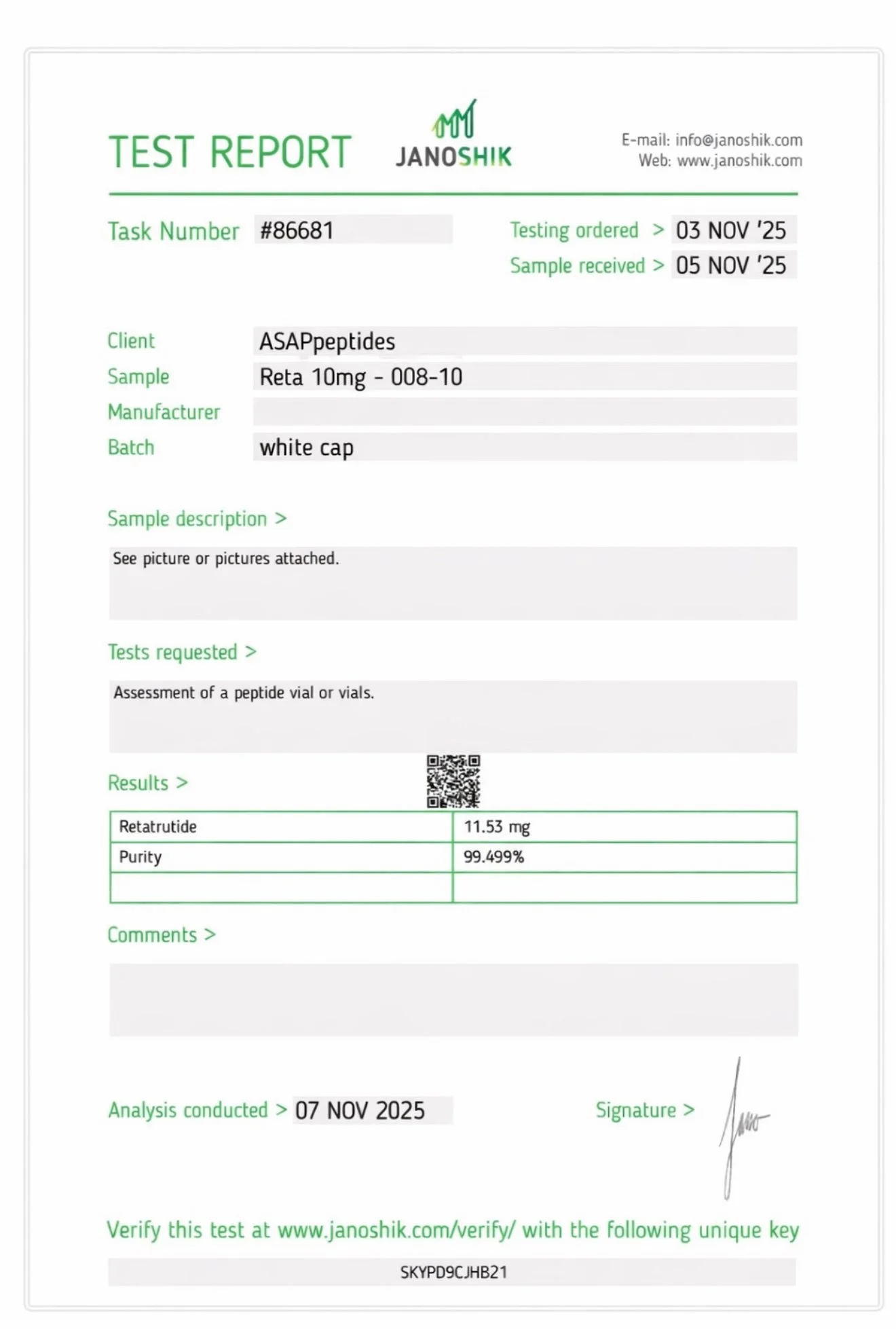 Image 3 of 6
 Image 4 of 6
 Image 5 of 6
 Image 6 of 6